
 Webcams
  Weather
  Events
  Tours
Tours Traces of yesteryear
Landscape in transition
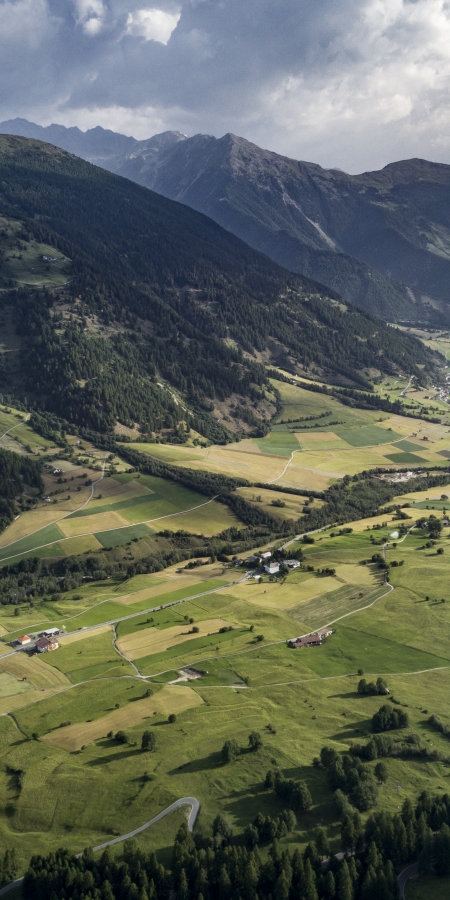
From traditional use to the modern landscape
In many parts of Switzerland, the cultural landscape remained richly structured well into the 19th century. Small fields and fruit trees surrounded the settlements. Hedges and stone walls separated the small plots from one another. For a long time, traditional methods of cultivating the land remained largely unchanged. It was only with the increasing mechanisation and intensification of agriculture that a significant transformation began. Many features disappeared: individual trees were felled, hedges removed, dry stone walls dismantled and terraces levelled.
Today, the landscape is also changing due to climate change: tree lines are rising, meadows dry out earlier in summer, streams carry less water, and extreme weather events are leaving their mark. These developments are affecting agriculture, forests, water bodies and biodiversity. Many traditional structures still remain – yet their ecological value is becoming increasingly important under the new climatic conditions.

Time travel
A comparison of landscape photographs, past and present, offers an objective view of changes that are sometimes only subtle. In Val Müstair, many features of the landscape remain; change is often only apparent on a small scale.
A look to the future complements this journey through time: scientifically grounded scenarios, presented in images, illustrate possible future developments in the landscape and demonstrate how adapted land management can succeed. Measures in agriculture, sustainable forest management, the enhancement of water bodies and the preservation of structurally rich landscape elements can help to make the cultural landscape more resilient. In this way, it remains a home, a habitat for biodiversity and the foundation for sustainable tourism development – even under changing climatic conditions.



Contact
Linda Feichtinger (research | monitoring)
- +41 81 851 60 76